
Birth injuries can leave families with overwhelming questions: Was this a known complication, or did something go wrong in the delivery room? This guide is for parents and caregivers in Georgia who are trying to understand how a potential birth injury malpractice situation is typically evaluated—without assuming fault or promising outcomes. These cases matter because the stakes can be lifelong: a child’s future care needs, a parent’s ability to work, and the emotional toll of not having clear answers. In the summer months, when routines shift and appointments get harder to coordinate, it can be even more difficult to gather records and keep track of what happened. A careful, step-by-step review can help you separate a tragic outcome from a legally actionable claim.
For a plain-language overview of the legal building blocks that apply in Georgia, see Understanding Georgia’s Medical Malpractice Law: Duty, Breach, Causation, and Damages.
Bottom Line Upfront: How These Cases Are Evaluated
- A bad outcome alone isn’t proof; evaluation focuses on duty, breach (standard-of-care violation), causation, and damages.
- The timeline matters: pregnancy history, labor monitoring, delivery decisions, and newborn care are reviewed as one connected story.
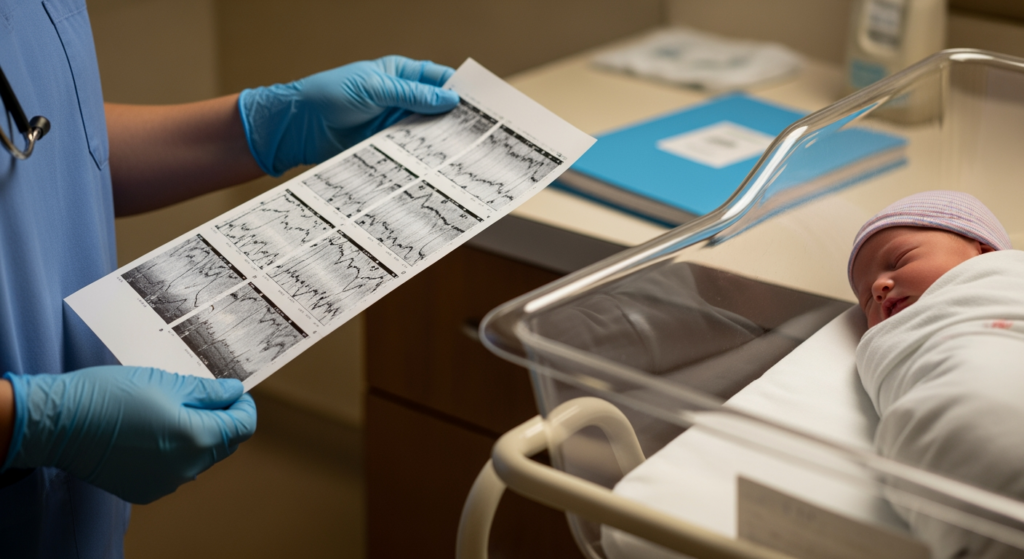
- Medical records drive the analysis, including fetal monitoring strips, nursing notes, medication logs, and NICU records.
- Experts are typically needed to assess whether care met the standard and whether it caused the injury.
- Damages are case-specific and may include long-term care needs, disability impacts, and family losses.
How a Georgia Birth-Injury Case Review Typically Works
Evaluating a suspected birth-related injury usually starts with a simple question: What should a reasonably careful healthcare team have done under similar circumstances, and what actually happened? In Georgia, a medical malpractice claim generally requires proof of four elements:
- Duty: A provider-patient relationship existed (for example, obstetric care during labor and delivery).
- Breach: The provider failed to meet the applicable standard of care.
- Causation: That failure contributed to the injury (not just that an injury occurred).
- Damages: The injury caused measurable harm (medical needs, disability, or death).
Because labor and delivery can change quickly, the evaluation often centers on decision points—when risks appeared, what information the team had, what options were available, and whether the response was timely and appropriate.
Why Timing and Documentation Can Change the Outcome
In these cases, “timing” is not just about how long labor lasted—it’s about whether clinical warning signs were recognized and acted on. Delays can matter when there are signs of fetal distress, maternal complications, or problems progressing through delivery. Documentation matters because it’s the best way to reconstruct what happened without relying on memory alone.
Practical implications families often face include:
- Unclear explanations at discharge, especially when multiple teams (OB, anesthesia, pediatrics, NICU) were involved.
- Cost and care planning pressure if the child needs therapies, equipment, or ongoing specialty care.
- Record retrieval friction when records are spread across clinics, hospitals, and pediatric providers.
- Emotional whiplash—grief, guilt, and confusion can make it hard to organize details.
Common Missteps Families Make After a Suspected Birth Injury (Checklist)
- Assuming “complication” means “no accountability” — some complications are unavoidable, but others may involve preventable errors; the difference requires review.
- Relying only on verbal explanations — what you were told may not capture the full clinical timeline reflected in the chart.
- Only collecting discharge summaries — key details may be in fetal monitoring, nursing notes, anesthesia records, operative reports, and medication administration logs.
- Delaying a written timeline — memories fade; a simple, dated narrative can help an expert understand the sequence.
- Posting details publicly — public statements can be misunderstood or taken out of context later.
- Focusing on one moment — evaluation usually looks at prenatal care, labor management, delivery technique, and newborn resuscitation as a whole.
A Smart, Step-by-Step Plan to Prepare for a Case Review (Checklist)
- Write a timeline of pregnancy, labor, delivery, NICU/newborn course, and early pediatric follow-ups (dates, symptoms, major conversations).
- Request complete records from each facility and provider involved (clinic, hospital, NICU, pediatrician), not just summaries.
- Ask for fetal monitoring data (often stored separately) and confirm you receive the actual strips/exports when available.
- Keep a running list of providers (names, roles, departments) and any transfers between units.
- Document current impacts in practical terms: therapies, equipment, missed work, and caregiving hours.
- Organize records chronologically so an attorney or medical expert can spot key decision points efficiently.
- Preserve communications you already have (patient portal messages, written instructions, appointment summaries).
Professional Insight: The Detail Most People Overlook
In practice, we often see that the most important questions aren’t about a single dramatic event—they’re about whether a series of small choices added up to a preventable injury, especially when monitoring data, nursing notes, and escalation decisions don’t align neatly.
When It’s Time to Talk to a Lawyer
Not every difficult delivery involves negligence, but a professional review may be worth considering when the outcome is severe or the story doesn’t add up. Situations that often justify a closer look include:
- Unexpected severe neurologic injury or concerns about oxygen deprivation around the time of delivery.
- Emergency interventions (urgent C-section, operative vaginal delivery, significant resuscitation) followed by serious complications.
- Conflicting explanations from different staff members about what happened and why.
- Missing or incomplete records, or difficulty obtaining key documentation like fetal monitoring.
- Long-term disability concerns requiring ongoing therapies, equipment, or specialized care.
- Loss of the baby or life-threatening maternal complications associated with medical care.
Frequently Asked Questions
What has to be proven in a Georgia medical negligence claim involving childbirth?
Generally, the review focuses on whether a provider owed a duty of care, breached the standard of care, caused the injury, and whether there are damages. Each element typically requires careful medical and legal analysis.
Can a child’s condition be caused by something other than delivery-room care?
Yes. Some outcomes may relate to prenatal factors, genetics, infection, prematurity, or unavoidable complications. That’s why causation is a separate step in the evaluation, not an assumption.
Which records are most important to collect after a serious delivery complication?
Often important records include prenatal records, labor and delivery notes, fetal monitoring data, medication administration logs, anesthesia records, operative reports (if any), newborn resuscitation documentation, NICU records, and early pediatric follow-up notes.
Does an emergency C-section automatically mean someone did something wrong?
No. Emergency procedures can be appropriate and lifesaving. The legal question is whether the decisions leading up to the emergency—and the response once risks appeared—met the applicable standard of care.
How long does it take to evaluate a potential childbirth-related malpractice matter?
It depends on how quickly complete records can be obtained and whether medical experts are needed to review them. Complex cases can require more time because the timeline and causation issues must be analyzed carefully.
Taking the Next Step with Clear Information
When a birth injury changes your family’s life, it’s normal to want answers that are specific, documented, and trustworthy. A careful evaluation typically starts with records, builds a timeline, and then tests the facts against the medical standard of care and causation. Even when the outcome is devastating, the law still requires proof—not assumptions. If you’re considering a review, being organized and detail-focused can make the process more efficient and less stressful.
Learn More About Our Services
Discover how we can help you achieve your goals.


