
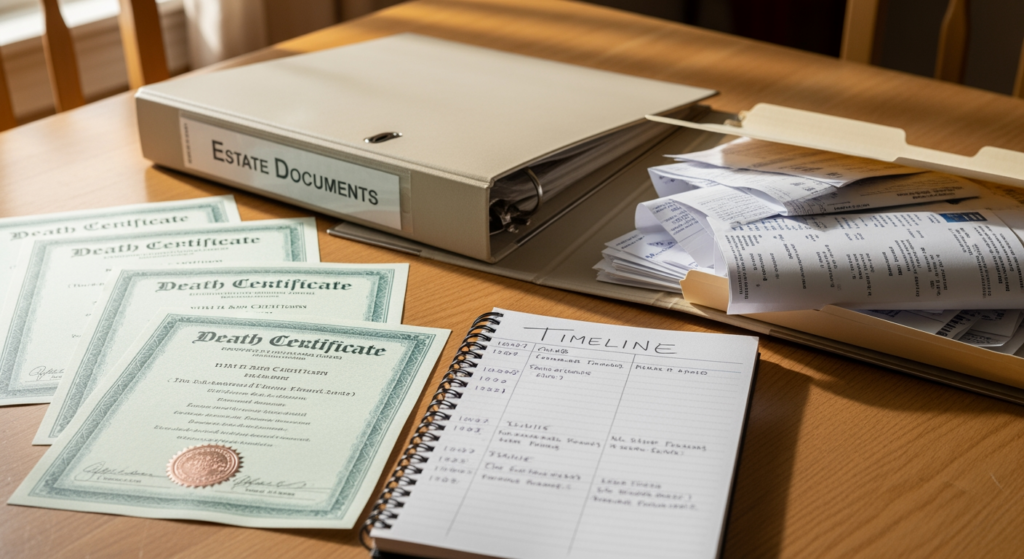
After a sudden loss, it’s hard to know what to do first—especially when you’re also trying to preserve important information. This unexpected death in Georgia checklist is for families who need a practical, organized way to gather documents and records that may matter for benefits, insurance, estate issues, and (in some situations) a potential wrongful death in Georgia or medical malpractice review. During summer schedules—when family members may be traveling or kids are out of school—getting organized can be even harder, so a clear list can help reduce avoidable stress.
One important note: a tragic outcome alone does not automatically mean malpractice or wrongful death. These claims typically require proof of duty, breach, causation, and damages under Georgia medical malpractice law, and that determination usually requires careful legal and medical review.
How Wrongful Death Documentation Typically Works in Georgia
In Georgia, families often need documents for several parallel tracks: (1) practical affairs (funeral arrangements, bills, accounts), (2) insurance and employment benefits, (3) estate administration, and (4) a possible legal evaluation of whether the death may be connected to negligence. Documentation helps answer basic questions like: What happened, when did it happen, who provided care, what decisions were made, and what financial and personal losses followed?
Because medical care can involve multiple providers and facilities, records may be spread across EMS, emergency departments, inpatient units, specialists, imaging centers, labs, and post-acute care. A clear document set and a simple timeline can help professionals review the situation without relying on memory alone.
Why Timing and Paperwork Can Affect a Death-Related Claim
Waiting doesn’t just make things emotionally heavier—it can make information harder to retrieve. Records can be stored in different systems, staff turnover happens, and families may lose track of who said what. If your family later decides to explore legal options, missing documentation can slow the review process and make it harder to evaluate whether the required legal elements can be proven.
Documentation also affects day-to-day stability. Life insurance, survivor benefits, and account access often depend on specific forms, certified copies, and proof of relationship. Getting organized early can reduce repeat phone calls and prevent avoidable delays.
Your Unexpected Death Georgia Checklist: Documents to Gather
Tip: Use a single binder or secure digital folder with subfolders (Identity, Medical, Insurance, Estate, Bills, Timeline). If you can, assign one person to track requests and log dates.
1) Identity, Relationship, and Authority
- ✓ Government-issued photo ID for the person handling affairs
- ✓ Certified copies of the death certificate (order multiple if possible)
- ✓ Marriage certificate (if applicable)
- ✓ Birth certificates for minor children (if applicable)
- ✓ Any court appointment papers (if an estate representative/executor is appointed)
2) Death-Related Records
- ✓ Death certificate worksheet details (if provided by funeral home)
- ✓ Coroner/medical examiner or investigating agency contact info and case number (if applicable)
- ✓ Autopsy report and findings (if performed and available)
- ✓ Funeral home contract and itemized statement
3) Medical Care and Facility Records (If Medical Care Was Involved)
- ✓ EMS/ambulance run report
- ✓ Emergency department records (triage notes, physician notes, discharge/transfer summary)
- ✓ Inpatient hospital records (history & physical, progress notes, consults, operative notes, nursing notes)
- ✓ Medication administration records and pharmacy records (where available)
- ✓ Lab results, imaging reports (CT/MRI/X-ray), and pathology reports (if applicable)
- ✓ Nursing home or rehab facility chart (if applicable)
- ✓ Primary care and specialist office records for the months leading up to the event (if relevant)
- ✓ Billing statements and itemized bills (often separate from clinical records)
4) Insurance and Benefits
- ✓ Health insurance cards and plan information
- ✓ Life insurance policies (employer-provided and private)
- ✓ Disability policies (if any)
- ✓ Vehicle insurance policies (if a crash was involved)
- ✓ Employment benefits packet and HR contact information
- ✓ Any denial letters or explanation-of-benefits (EOB) documents
5) Financial and Household Records
- ✓ Bank and credit union statements
- ✓ Mortgage/lease documents and utility accounts
- ✓ Credit card statements and outstanding loan documents
- ✓ Recent tax returns and W-2/1099 forms (if available)
- ✓ Proof of income and employment (pay stubs, offer letters, job title/role)
6) Communications and Timeline
- ✓ A one-page timeline: symptoms/events, dates, locations, and who was contacted
- ✓ Names and roles of providers/facilities involved (even partial lists)
- ✓ Copies of patient portal messages, emails, and letters
- ✓ Notes from phone calls (date/time, who you spoke with, what was said)
- ✓ Photos of relevant items (medication labels, discharge instructions) stored securely
When It Makes Sense to Ask for Legal Help
- ✓ The death followed recent medical treatment and you have unanswered questions about what happened.
- ✓ Records seem incomplete or inconsistent (missing notes, conflicting summaries, unexplained gaps in care).
- ✓ Multiple facilities/providers were involved, making it hard to understand the chain of events.
- ✓ You’re receiving conflicting information about cause of death, complications, or “expected” outcomes.
- ✓ The financial impact is significant (lost income, large medical bills, long-term family needs) and you need clarity on options.
Reaching out doesn’t mean you’re accusing anyone of wrongdoing. It can simply be a way to understand whether the available facts support a review under the legal standards that apply.
Common Questions Families Ask
How many death certificates should we order?
Many families find that multiple certified copies are useful because banks, insurers, and benefit administrators may each require one. The right number depends on how many accounts and policies exist.
Can we request medical records ourselves?
Often, yes. Facilities typically have a medical records department and a process for authorized requests. Requirements vary, and you may need proof of authority or relationship depending on the situation.
What if we suspect the death relates to a medical error?
It may be worth gathering records and getting a qualified review. A concern is not the same as proof, and a legal claim generally depends on showing duty, breach, causation, and damages based on the facts and medical standards.
Do billing records matter if we already have clinical records?
They can. Billing and itemized statements sometimes help identify dates of service, departments involved, and the scope of care—especially when clinical records arrive in separate batches.
What should we write down in a timeline?
Include dates, symptoms, where care was provided, who you spoke with, major decisions (tests, transfers, discharge), and any sudden changes. Keep it factual and as specific as you can.
Call Cook & Tolley about Your Wrongful Death Case
Grief makes paperwork feel impossible, but a focused document plan can reduce stress and protect your family’s options. Use the checklist to gather core records, keep originals safe, and create a simple timeline of events. If questions remain about how or why the death occurred, organized documentation can make it easier to get clear answers. When you’re ready, you can share what you have with a professional for a careful, fact-based review.


