
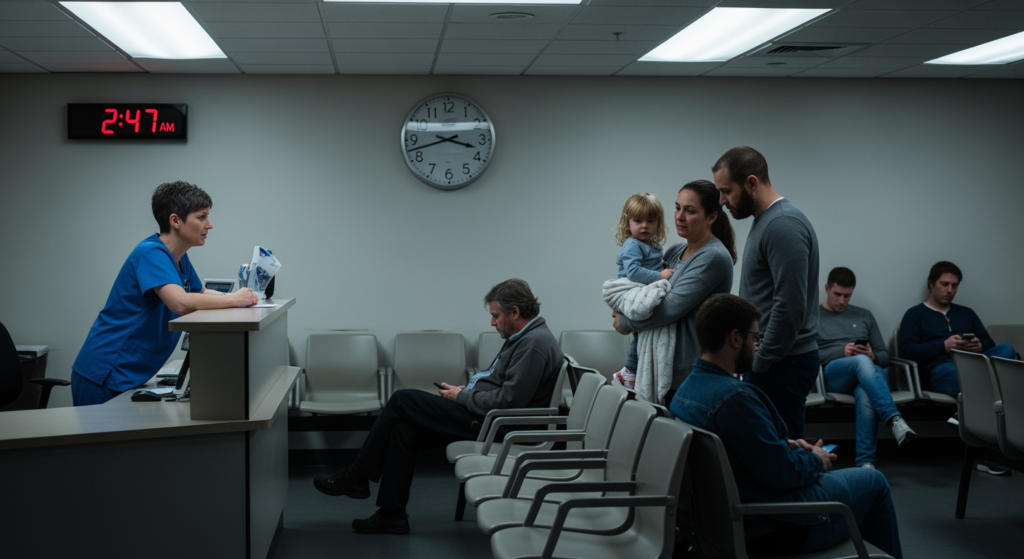
ER waiting rooms can feel especially crowded in the summer, when travel, outdoor activity, and busy family schedules can mean more urgent-care needs and more emergency visits. When a serious condition worsens while someone is waiting—or after they were sent back to the lobby—people often ask the same question: were the ER triage delays just unfortunate, or were they legally negligent? This article is for patients and families in Georgia trying to make sense of what happened, what “triage” is supposed to do, and what facts matter if you’re considering a legal review. The goal is clarity: what needs to be proven, what records usually matter, and what steps can help preserve the story of the timeline without assuming wrongdoing.
For a deeper explanation of the legal building blocks (duty, breach, causation, and damages), see Understanding the Elements of Medical Malpractice in Georgia.
Bottom Line Upfront on ER triage delays
- Triage is prioritization, not a promise of fast care. It’s designed to identify who needs immediate attention first.
- A long wait alone usually isn’t enough. Legal questions typically turn on whether the triage process fell below the standard of care and caused harm.
- Timelines matter. Key events include arrival time, first assessment, vital signs, re-checks, orders, and when deterioration was recognized.
- Communication and reassessment are often central issues. If symptoms changed, what was reported, documented, and acted on can be important.
- Records—not memories—tend to drive the analysis. The triage note, vitals, nursing documentation, and ED flow sheets are commonly reviewed.
How ER triage is supposed to work (and where delays can occur)
In an emergency department, triage is the intake and sorting process used to decide who should be evaluated first based on urgency. In plain terms, it’s a safety filter: chest pain with unstable vital signs may be prioritized over a stable injury, even if the stable injury arrived earlier.
Delays can happen at multiple points, including:
- Before triage: a backlog at registration or limited staff availability.
- During triage: incomplete symptom history, missed red flags, or vital signs not taken or not repeated.
- After triage: long waits for a room, delays in provider evaluation, or delays in ordering tests or treatment.
- During reassessment: a patient’s condition changes in the waiting area and the change isn’t recognized or acted on.
From a legal perspective in Georgia, the focus is usually not whether the ER was “busy,” but whether the care team’s actions met the applicable standard of care under the circumstances—and whether any lapse actually caused additional injury.
The real-world consequences of waiting too long
When time-sensitive conditions are involved, a delay can affect outcomes even if everyone is doing their best. In evaluating potential liability, the practical stakes often center on whether the delay changed the course of the illness or injury.
Examples of issues people commonly worry about (without assuming malpractice) include:
- Condition progression: symptoms worsen, vital signs deteriorate, or complications develop while waiting.
- Narrowing treatment windows: some interventions are more effective when started earlier.
- Additional procedures or longer recovery: what might have been treatable sooner becomes more complex.
- Financial and family strain: missed work, caregiving needs, and unexpected long-term limitations.
Seasonally, it can be harder to reconstruct what happened because families are traveling, juggling childcare, or dealing with disrupted routines—making it easier for details (names, times, who said what) to get lost.
Common timeline mistakes families make (use this checklist)
- Assuming the wait time alone proves negligence. The legal question is typically whether there was a breach of the standard of care and a causal link to harm.
- Not writing down symptom changes. If pain escalated, confusion started, breathing changed, or fainting occurred, note when and how it was reported.
- Leaving without documenting the reason. If someone leaves due to long waits, the “why” and the condition at that moment can become disputed later.
- Overlooking the waiting-room phase. Important events can occur before a room assignment; that period may be crucial to the timeline.
- Relying on screenshots and portals only. Patient portals may not show triage notes, ED flow sheets, or internal timestamps.
- Posting details online. Public posts can create misunderstandings about timing and symptoms and may be taken out of context.
A smart summer-ready documentation plan
- Capture a simple timeline. Arrival time, triage time, first vitals, first provider contact, tests ordered, and any major symptom changes.
- Write down who you spoke with. Names (or roles), what you reported, and what you were told—especially if symptoms worsened.
- Keep discharge paperwork and instructions. These can help show what the ER understood and what follow-up was recommended.
- Request complete records when appropriate. Ask for ED records that include triage notes, nursing notes, vital sign trends, medication administration, and timestamps.
- Preserve related materials. Transportation receipts, work notes, and a short journal of symptoms and limitations in the days after the visit.
- Identify the “change point.” If the patient took a turn, pinpoint when it started and what happened next.
Professional insight: what gets missed in triage-delay reviews
In practice, we often see that the biggest disagreements aren’t about whether the ER was busy—they’re about reassessment. Many situations turn on whether new or worsening symptoms in the waiting area were communicated, documented, and acted on in a timely way, and whether the record reflects that evolving picture clearly enough to evaluate standard of care and causation.
When a legal review may be worth considering
Not every delay is malpractice, and it usually takes medical and legal review to evaluate duty, breach, causation, and damages. That said, it may be reasonable to seek help when:
- There was a serious outcome after a prolonged wait (for example, permanent injury, significant complications, or death).
- Symptoms clearly worsened while waiting and you believe the change wasn’t appropriately reassessed or escalated.
- There are gaps or contradictions in the timeline (what you remember vs. what the chart appears to show).
- You suspect a missed red flag at triage (such as abnormal vital signs, neurological changes, or severe chest/abdominal symptoms) and harm followed.
- You’re overwhelmed by records and terminology and want a structured way to understand what happened.
Your Questions, Answered
Is a long emergency room wait automatically medical malpractice in Georgia?
No. A long wait can be frustrating and even dangerous, but malpractice generally requires proof of duty, a breach of the standard of care, causation, and damages. The specific facts and records usually determine whether the legal elements can be supported.
What records are most important for evaluating a triage problem?
Commonly reviewed records include the triage note, vital signs and trends, nursing notes, ED flow sheets, medication administration records, provider notes, orders, and time-stamped events (like labs and imaging). These help reconstruct what was known and when.
What if symptoms got worse in the waiting room and no one noticed?
This is often a key factual issue. A review typically looks at whether worsening symptoms were communicated, whether reassessment occurred, what the documentation shows, and whether earlier escalation would have changed the outcome.
If the hospital was understaffed or crowded, does that change the legal analysis?
Crowding can explain how delays happen, but it does not automatically answer whether the standard of care was met in a particular case. The analysis is usually individualized and record-driven.
How soon should a family start organizing information after a bad ER outcome?
As soon as you reasonably can, it helps to write down a timeline, preserve paperwork, and identify witnesses while memories are fresh. That organization can make any later medical or legal review more accurate.
Taking the next step with clarity
When an emergency visit ends with a life-changing injury or loss, it’s normal to feel stuck between “something went wrong” and “I don’t know what counts legally.” The most productive next step is usually a careful timeline and record-based review, not assumptions. If you’re trying to understand whether a delay in emergency prioritization may have crossed the line into negligence, getting informed can help you make decisions with less guesswork.
Book Your Consultation
Schedule a free consultation with our experts.


