
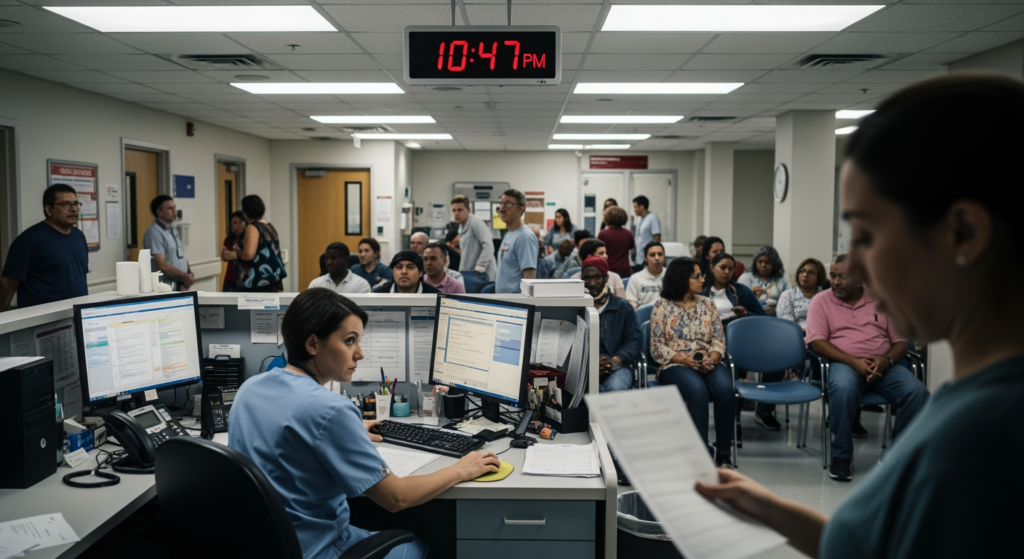
Summer ER crowding Georgia patients experience can turn a stressful visit into a confusing one—especially for families trying to understand whether a bad outcome was unavoidable or the result of preventable breakdowns in care. This article is for patients and loved ones who left an emergency room with new complications, a missed diagnosis, or a sense that “something got lost in the shuffle.” The goal isn’t to assume wrongdoing; it’s to help you spot practical warning signs that may suggest a liability and care-team issue worth reviewing. When emergency departments are packed, handoffs multiply, documentation gets rushed, and small communication gaps can become big problems. Knowing what to look for can help you protect your health, preserve key information, and decide when it makes sense to seek professional guidance.
If you want a clear framework for what must be proven in a Georgia case (and what does not qualify), start with Understanding the Elements of Medical Malpractice in Georgia.
Bottom Line Upfront: Warning Signs That Deserve a Second Look
- Repeated handoffs with conflicting information can signal communication failures that affect decisions.
- Long delays without reassessment may increase the risk of a missed change in condition.
- Test results that aren’t explained—or seem to “disappear” can point to follow-up and documentation gaps.
- Discharge that feels rushed or unclear may lead to unsafe transitions and preventable return visits.
- Medication confusion (wrong dose, allergy overlooked, unclear instructions) can indicate process breakdowns.
- “No one is in charge” moments—when responsibility is unclear—often correlate with preventable errors.
How Crowded ERs Can Create Care-Team Liability Problems
Emergency care is designed for speed, prioritization, and constant triage. When the department is full, the system relies even more heavily on teamwork: accurate charting, clear orders, timely follow-up on labs and imaging, and reliable handoffs between providers and shifts.
From a legal standpoint, a poor outcome alone doesn’t establish medical malpractice. A claim generally requires proof of duty (a provider-patient relationship), a breach of the standard of care, causation (the breach caused the harm), and damages (injury, worsening condition, or death). Crowding can be the backdrop, but the key question is whether specific actions or omissions fell below what a reasonably careful provider or team would have done under similar circumstances—and whether that failure actually caused harm.
Why Timing and Teamwork Matter More Than Ever During Peak ER Volume
When ER volume spikes, the practical stakes often show up in a few predictable places:
- Delays compound risk: Some conditions change quickly. If reassessments don’t happen, a patient’s deterioration may be missed.
- More handoffs, more opportunities for miscommunication: Each shift change or unit transfer is a chance for details to be lost.
- Discharge becomes a pressure point: When beds are needed, patients may be discharged quickly, sometimes with incomplete instructions or follow-up planning.
- Documentation can lag behind reality: If the chart doesn’t reflect what happened (or what was decided), it becomes harder to coordinate care and harder to reconstruct events later.
None of this proves negligence by itself. But these conditions can make certain warning signs more meaningful—because they increase the likelihood that a preventable process breakdown affected care.
Red-Flag Checklist: Common Breakdowns to Watch For in a Busy ER
- Contradictory explanations from different staff members (e.g., one person says you’re being admitted, another says you’re being discharged).
What to do: Ask who the supervising clinician is and request a clear, single plan repeated back to you. - Long waits with no repeat vitals or symptom check-ins despite worsening pain, confusion, shortness of breath, or new symptoms.
What to do: Calmly document the change (time and symptom) and ask whether you’re being re-triaged or reassessed. - Tests ordered but results never discussed (or you learn later that a result was abnormal).
What to do: Request a plain-language explanation of key results and what follow-up is needed. - Medication or allergy mismatches (wrong medication listed, allergy not reflected, discharge meds don’t match what you were told).
What to do: Ask staff to reconcile the medication list and confirm allergies are correctly recorded. - Unclear responsibility during transitions (e.g., transferred from waiting room to bed, ER to imaging, ER to inpatient unit, with no one introducing themselves or explaining next steps).
What to do: Ask, “Who is responsible for my care right now?” and note the name/role if provided. - Rushed discharge with vague instructions (no clear return precautions, no follow-up plan, or instructions that don’t match your symptoms).
What to do: Ask for specific warning symptoms to watch for and where follow-up should occur. - “It’s probably nothing” without documenting key symptoms (especially when symptoms persist or worsen).
What to do: Ask that your primary symptoms and their timeline be noted in the chart and repeated back to you. - Imaging or lab delays without escalation when the clinical picture suggests urgency.
What to do: Ask what the team is waiting for and whether there is an alternative plan if delays continue.
Your Practical Action Plan If You Notice These Warning Signs
- Write down a simple timeline: arrival time, major symptom changes, tests ordered, and what you were told (include names/roles if you have them).
- Ask one clarifying question at a time: “What is the working diagnosis?” “What are we ruling out?” “What happens next if the test is normal/abnormal?”
- Request medication reconciliation: confirm current meds, new meds, and allergies are accurate before discharge.
- Get discharge instructions and key results in writing: keep them together with any patient portal printouts.
- Follow up promptly with the next provider you see: bring your timeline and paperwork so the story doesn’t reset to zero.
- Preserve records and communications: keep voicemails, portal messages, and appointment summaries in one folder.
- Focus on facts, not blame: what happened, when it happened, who said what, and what changed afterward.
Professional Insight: Where Crowding-Related Cases Often Turn
In practice, we often see that the most important details aren’t dramatic—they’re small coordination moments: a lab value that wasn’t acted on, a handoff that omitted a key symptom, or discharge instructions that didn’t match the patient’s actual condition. Those details can determine whether the issue was an unfortunate outcome or a potentially preventable breakdown that deserves closer review.
When It’s Time to Seek Outside Help Reviewing the Care
Consider getting professional help (medical and/or legal) when the situation includes one or more of the following:
- Serious harm or rapid deterioration after an ER visit, especially if symptoms were minimized or not reassessed.
- A return visit, admission, surgery, or ICU transfer soon after discharge that suggests the initial evaluation may have missed something significant.
- A confirmed missed diagnosis (for example, a condition identified later that reasonably should have been considered earlier).
- Major discrepancies in the record (what you experienced vs. what the chart says) that affect understanding of the timeline.
- Permanent injury or wrongful death concerns where the family needs answers about what happened and why.
Getting help doesn’t mean you’re accusing anyone. It can be a structured way to understand whether the standard of care may have been met and what options, if any, exist.
Your Questions, Answered About Crowded ER Visits and Possible Negligence
Can a hospital be responsible for mistakes that happen during high patient volume?
Sometimes responsibility may involve individuals, systems, or both, but it depends on the facts. High volume alone doesn’t establish liability; the key issues are whether the standard of care was breached and whether that breach caused harm.
Is a long wait time enough to prove a claim?
Not by itself. The focus is typically on whether delays led to a failure to assess, diagnose, or treat in a way that a reasonably careful provider would have—and whether that delay caused measurable harm.
What records should I keep after an emergency room visit with complications?
Keep discharge paperwork, medication lists, test summaries you received, follow-up instructions, portal messages, and a written timeline of symptoms and major events. These materials can help professionals understand what happened without relying on memory alone.
What if different clinicians told me different things?
Conflicting information can happen in fast-moving settings, but it can also indicate a handoff or communication problem. Document who said what (if known) and what ultimately happened, then share that timeline with your follow-up provider.
Do I need proof of negligence before talking to a lawyer?
No. An initial conversation is often about organizing the timeline and identifying whether the situation warrants deeper medical review. A viable case—if any—would still require evidence of duty, breach, causation, and damages.
Taking Action Without Jumping to Conclusions
Crowded emergency departments can strain communication, follow-up, and documentation—three areas where preventable mistakes sometimes occur. If you recognize the warning signs above, focus on gathering clear information, keeping records, and getting a coherent explanation of what happened. That approach can help you protect your health and make informed decisions about next steps. If the outcome is severe or the story doesn’t add up, a professional review may help clarify whether there’s a viable path forward.
Ready to Get Started?
Our team is here to help. Give us a call to discuss your needs.


